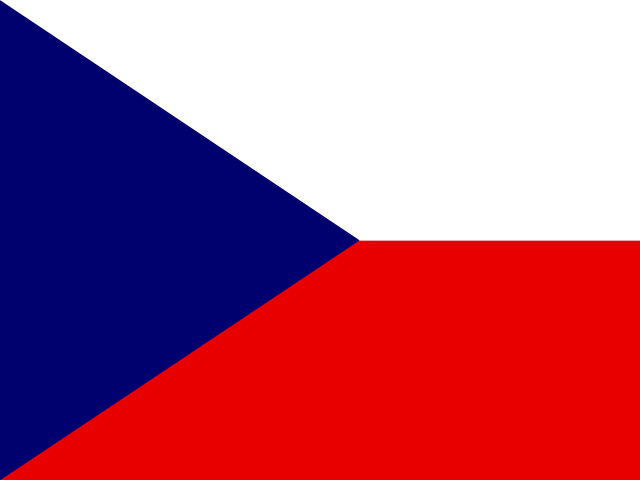

We aim to explore the key legal requirements for expatriates and businesses in the Czech Republic. Understanding employment law and business regulations can be tough. Our goal is to offer clear insights into what you need to comply with.
Knowing these legal requirements is vital for success in the Czech Republic. It’s important for both individuals and companies. This knowledge helps you operate smoothly in this lively European country.
Introduction to Legal Requirements in the Czech Republic
Knowing the laws in the Czech Republic is key for anyone moving there. This guide will cover the basics of the laws that affect daily life. The Czech Republic has rules for work, business, and personal rights.
The Constitution and Labour Code are key. They set out the rights and duties of workers and bosses. Knowing these laws helps us follow the rules and settle in the Czech Republic.
We will explore more laws in the next sections. These laws shape life in the Czech Republic. Understanding them is vital for success in this legal environment.
Key Employment Laws in the Czech Republic
In the Czech Republic, knowing employment laws is key for everyone. The Labour Code is at the heart of these laws. It protects workers and explains their rights and duties, including when jobs end and benefits.
There’s more to it than just the Labour Code. Other laws also shape the work world.
Understanding the Labour Code
The Labour Code is the main law for work in the Czech Republic. It makes sure workers are treated fairly. It covers important topics like:
- Protecting workers during disciplinary actions
- Rules for ending jobs
- Right to paid time off and extra pay
Other Significant Legislation
There are other laws that add to the framework. The Employment Act deals with work services and what employers must do. The Anti-Discrimination Act is also key, making sure everyone is treated equally, no matter their background.
Legal Requirements for Businesses Operating in Czechia
When we look at the legal needs for businesses in Czechia, several key points stand out. It’s vital to understand and follow these rules to avoid legal issues and build a solid business base.
First, we need the right permits and licences for our business type. These rules change based on what we do and where we are. So, we must do our homework and might need to talk to lawyers.
Registering with the Czech government is also a must. We need to sign up with the Czech Business Register and get a tax ID number. This makes sure we’re seen as a legal business and can follow the government’s rules.
Following Czech and EU labour laws is also key. This means treating employees fairly, following work safety rules, and knowing our duties in the workplace.
Staying on top of these rules helps us avoid problems and keeps our good name with clients and partners. Following Czech laws is essential for a successful business in the future.
Employment Contracts and Agreements
In the Czech Republic, employment contracts are key. They outline the relationship between employers and employees. It’s important to know about agreement types to follow legal provisions on employment. We’ll look at full-time, part-time, and fixed-term contracts under Czech law.
Types of Employment Agreements
Employment agreements differ based on the employer-employee deal. The main types are:
- Full-time contracts, which usually mean a 40-hour workweek.
- Part-time contracts for those working less than full-time.
- Fixed-term contracts for jobs lasting a specific time.
Key Provisions in Employment Contracts
Every employment contract must have key parts to protect both sides. Legal rules say these must include:
- Written agreements to be clear.
- Rules for ending employment.
- Guaranteed paid leave for employees.
- Extra benefits that can be included.
Legal Requirements for Business Registration
Starting a business in the Czech Republic requires knowing the legal steps. First, we need to choose the right business type. This could be a sole trader, a limited company, or something else. Each type has its own rules.
We must collect all the needed documents to start. This includes a business plan, proof of skills, and ID. After preparing these, we go to the Commercial Register. It’s a key step to follow the Czech Republic’s laws.
There are also ongoing tasks to keep our business legal. We must follow tax and labour laws. Keeping licenses up to date and following rules helps avoid legal problems later.
Compliance with Health and Safety Regulations
In the Czech Republic, health and safety rules are key to protecting workers. It’s vital for employers and employees to know these rules. This knowledge helps keep workplaces safe.
Overview of Occupational Health Standards
Occupational health standards in the Czech Republic aim to stop work-related injuries and illnesses. They set rules for work places, equipment, and training. Important parts include:
- Providing safe and healthy work conditions
- Doing regular risk checks and safety audits
- Putting in place needed safety steps and rules
Employee Rights under Health and Safety Laws
Employee health and safety rights are protected by laws in the Czech Republic. Every worker has the right to:
- A safe and risk-free workplace
- Training and the right gear for safety
- To report unsafe spots without fear
By spreading the word about health and safety rules, we help make work safer. This ensures that workers’ rights are always respected and valued.
Legal Requirements for Taxes and Social Security
In the Czech Republic, it’s key to know about tax and social security laws. These rules help everyone follow government rules and protect their rights at work.
Workers in the Czech Republic must pay income tax, which is taken from their pay. Employers must also keep up with their duties. They need to collect and send these taxes to the government correctly. If they don’t, they could face big fines and legal trouble.
Another important thing is social security. Both employers and workers pay into this system. It gives benefits like health care, pensions, and help when you’re out of work. Knowing the rates for these contributions is important for planning your finances and following the law.
In short, dealing with tax and social security laws in the Czech Republic needs careful attention. By following these rules, we help keep the economy stable and support the well-being of all workers.
Understanding Anti-Discrimination Laws in Czechia
The Anti-Discrimination Act in Czechia is key to fighting discrimination at work. It covers many reasons for discrimination, like age, gender, and disability. It makes sure everyone is treated equally, which employers must follow.
Scope of the Anti-Discrimination Act
This act covers all parts of work, from starting to ending a job. It protects people from unfair treatment and makes sure everyone gets the same chances. The act includes
- Inclusion against discrimination in job ads
- A fair hiring process
- Equal pay for the same work
- Protection from harassment and victimisation at work
Responsibilities of Employers
Employers in Czechia must know their duties to fight discrimination. They need to
- Make clear anti-discrimination policies and train staff
- Have an inclusive hiring process that values diversity
- Deal with discrimination complaints quickly and fairly
- Check their workplace practices often to follow the law
Trade Unions and Collective Bargaining in Czech Republic
In the Czech Republic, trade unions are key in protecting workers’ rights. They work within the law to talk on behalf of their members. This ensures fair work conditions and pay. It’s important for both workers and employers to know how collective bargaining works.
Collective bargaining is when union reps meet with employers to discuss work terms. They talk about things like wages, benefits, and safety. This helps improve work conditions and keeps employees happy and productive.
Collective bargaining is vital for protecting workers’ rights. Trade unions give workers a voice and make sure their rights are respected. This way, workers can confidently talk about their concerns and find solutions to work problems.
Legal Requirements for Employee Background Checks
In the Czech Republic, employers must follow strict laws when doing background checks. This is because of GDPR rules. It’s important to do these checks legally to protect candidates’ rights and keep trust.
Getting clear consent from people before starting checks is key. This helps keep personal data safe and makes the hiring process open.
Overview of GDPR Compliance
GDPR rules are very important for background checks. They say personal data must be used fairly and legally. People have the right to know how their data is used.
So, employers need to tell candidates how their personal info will be used. This keeps them in line with GDPR.
Types of Acceptable Background Checks
There are different kinds of background checks allowed in the Czech Republic. Some common ones are:
- Criminal record checks to find out about past legal problems.
- Employment verifications to check if a candidate’s work history is real.
- Education checks to make sure qualifications and degrees are correct.
- Reference checks from old employers to learn about a candidate’s work habits.
Legal Obligations for Data Protection
In the Czech Republic, businesses must follow strict data protection laws. These laws, based on the GDPR, aim to safeguard personal data. It’s vital for companies to know these rules to keep trust with employees and clients.
The GDPR sets out key data protection principles for organisations:
- Lawfulness, fairness and transparency: Personal data must be handled legally. It’s important to tell people how their data is used.
- Purpose limitation: Data should only be collected for real reasons. It shouldn’t be misused.
- Data minimisation: The data collected should be just enough for its purpose. It must be relevant and not excessive.
- Accuracy: We must ensure personal data is correct and updated.
- Storage limitation: Personal data should not be kept longer than needed.
- Integrity and confidentiality: We need to protect personal data from unauthorised access or breaches.
Not following these rules can lead to big fines and harm to reputation. So, it’s important to understand our GDPR duties. This helps us protect data well in our organisations.
Legal Requirements Surrounding Maternity and Paternity Leave
Maternity and paternity leave in the Czech Republic are key for supporting parents. Czech law offers 28 weeks of maternity leave. This can be longer for complicated births or twins.
Parents need to know their rights to care for their newborn. This knowledge is vital for their role in the family.
Paternity leave is a must for new dads, lasting two weeks. It must be taken within six months of the baby’s arrival. This ensures both parents can bond with their child while keeping their jobs.
Employers must follow these rules to meet Czech employment laws. These laws match EU standards, protecting all employees’ rights. Knowing these rules helps create a supportive work environment for families.
Minimum Wage and Employee Compensation Laws
In the Czech Republic, it’s important to know the rules about minimum wage and employee pay. Labour laws set a minimum wage to ensure workers get fair pay for their work. The current legal minimum wage is a benchmark for pay in different industries.
There are also rules for overtime and extra work. Employers must pay more for work done beyond regular hours. This not only makes workers happier but also boosts productivity and loyalty.
- Understanding the minimum wage is essential for compliance.
- Employee compensation must reflect the roles and responsibilities undertaken.
- Labour laws provide a framework for fair treatment and remuneration.
Legal Framework for Hiring Foreign Workers
In the Czech Republic, it’s key for businesses to know the rules for hiring foreign workers. They must follow strict hiring laws for non-EU nationals. This means foreign workers need the right work permits and visas before they start work.
There are important steps to follow when hiring foreign workers. Employers need to show they’ve tried to find a local worker first. They must also provide documents like:
- Proof of the vacancy and recruitment efforts within the EU.
- Qualifications and credentials of the foreign worker.
- Employment contracts outlining terms and conditions of employment.
Following these rules helps make the hiring process smoother. It also protects the rights of foreign workers in the Czech Republic. They get the same legal rights as local workers, including fair pay and safe working conditions.
It’s important for employers to understand immigration law well. By welcoming foreign workers, businesses can attract a wide range of talents. This can make their company culture richer and more innovative.
Understanding Legal Requirements in Relation to Work Permits
When you think about working in the Czech Republic, knowing about work permits is key. These permits are needed for people from outside the EU who want to work there. There are different types of permits, each with its own rules and conditions. It’s important for employers and job seekers to know this to follow the law and make hiring easier.
Types of Work Permits Available
In the Czech Republic, there are several types of work permits. They are made for different work situations:
- Employee Card: This is for long-term jobs in the Czech Republic. It’s for people with a job offer here.
- Blue Card: This is for highly skilled workers. You usually need a university degree for this.
- Intra-Company Transfer Permit: This is for people moving from a foreign branch to a Czech branch of the same company.
- Seasonal Work Permit: This is for temporary jobs, like in farming or tourism. It’s for short-term work.
- Specialised Work Permit: This is for jobs that are in high demand. It makes sure workers meet local needs.
Knowing about these types helps us follow the law. It makes it easier to find and apply for jobs in the Czech Republic.
Legal Considerations for Remote Work in Czechia
Remote work has become very popular in recent years. In the Czech Republic, we need to follow certain laws for remote work. This helps us build a strong team.
First, we must check how remote work changes employment contracts. These contracts should be clear about what’s expected, working hours, and tasks. Making changes to these contracts must follow Czech laws to protect everyone.
Health and safety are key in remote work. We must make sure remote workers have safe places to work. This might mean giving them the right equipment and resources.
Taxes are another important issue for remote work. We need to know how it affects taxes and reporting in the Czech Republic. Knowing this helps us handle the financial side of remote work better.
In summary, while remote work has many benefits, we must deal with legal issues carefully. By following employment laws and doing it well, we can support our remote team effectively.
Recent Developments in Czech Employment Law
Recent changes in Czech employment law show a lively legal scene. These changes affect both workers and companies. We see big updates that everyone in the workforce needs to know about.
The EU Pay Transparency Directive is a key change. It aims to make pay fair and equal. Companies must update their pay policies to meet these new rules.
There are also big changes in pension laws. These updates aim to make pensions more secure and sustainable. This affects employee benefits and what employers must do.
We need to keep up with these changes in employment law. Companies must work hard to meet the new rules. This helps protect their interests and those of their workers.
Conclusion on Legal Requirements in Czech Republic
Looking at the laws for work and business in the Czech Republic, it’s clear that following them is key. Knowing the Labour Code and other laws helps everyone work well together. This includes making sure both workers and bosses are safe and happy.
Also, sticking to tax rules, anti-discrimination laws, and data protection is vital for a business to do well in Czechia. It takes hard work and keeping up with the laws to succeed. This shows we care about doing things right and helps everyone.
In short, the laws in the Czech Republic are there to help everyone. By following them, we can do well and help the community and economy grow.